NINE GATES
2012-24 · 9 minutes 50 seconds · Digital Video, (excerpt)
Directed, filmed, edited by Paweł Wojtasik
Music by Stephen Vitiello
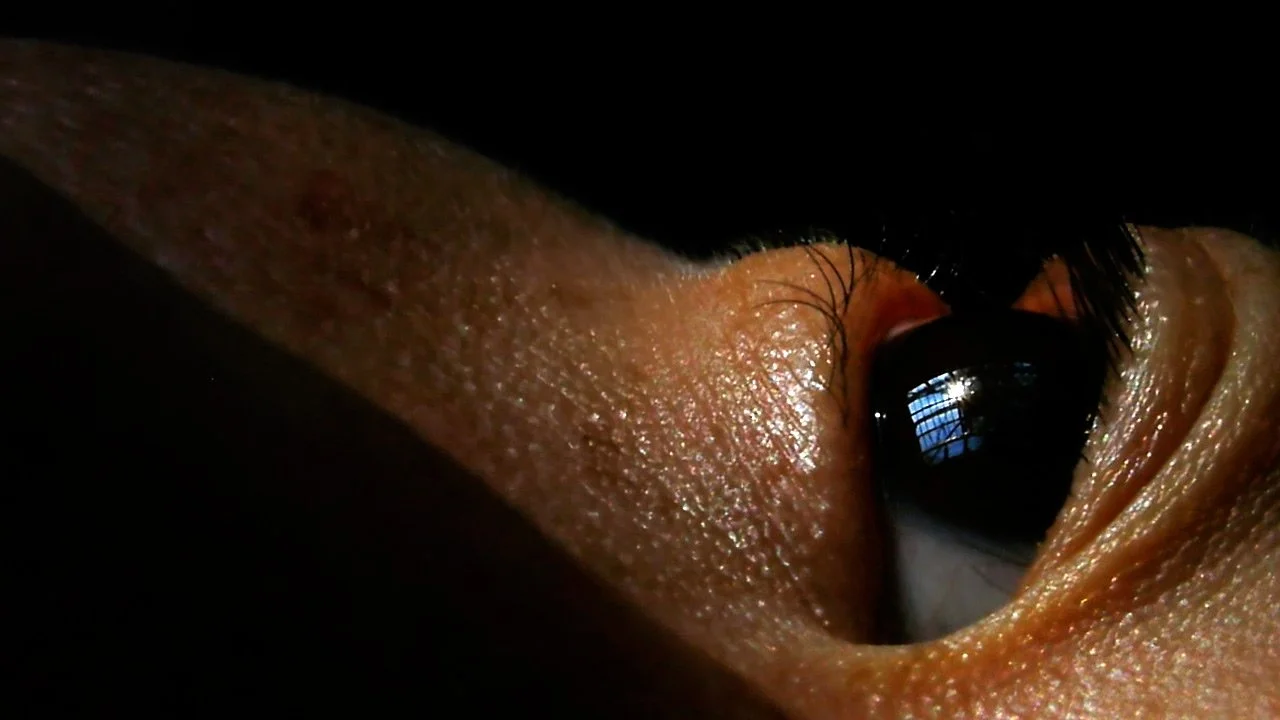
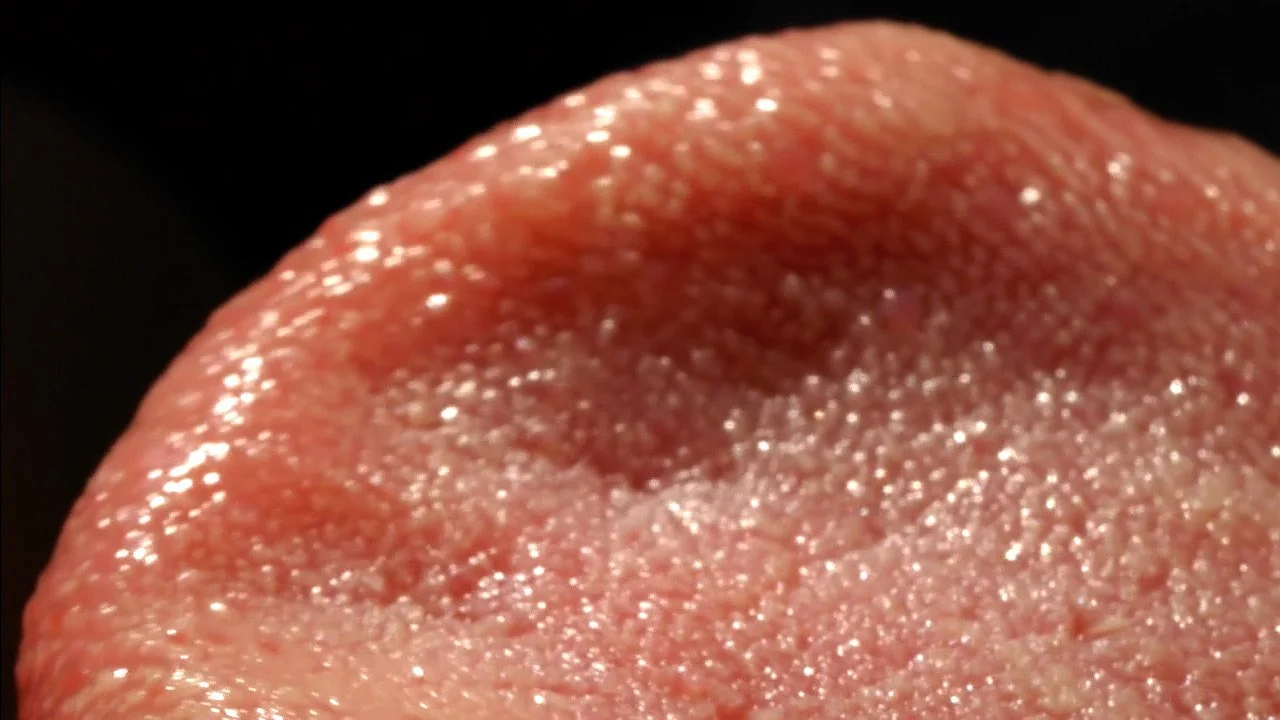
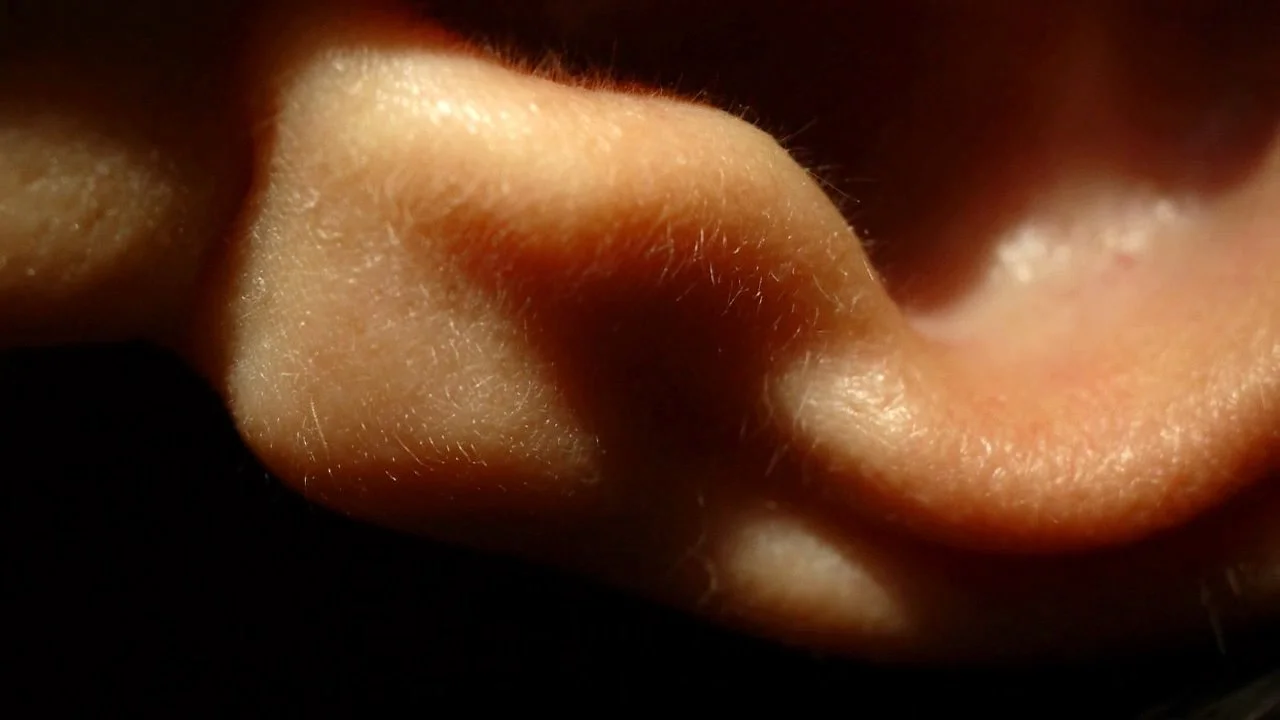
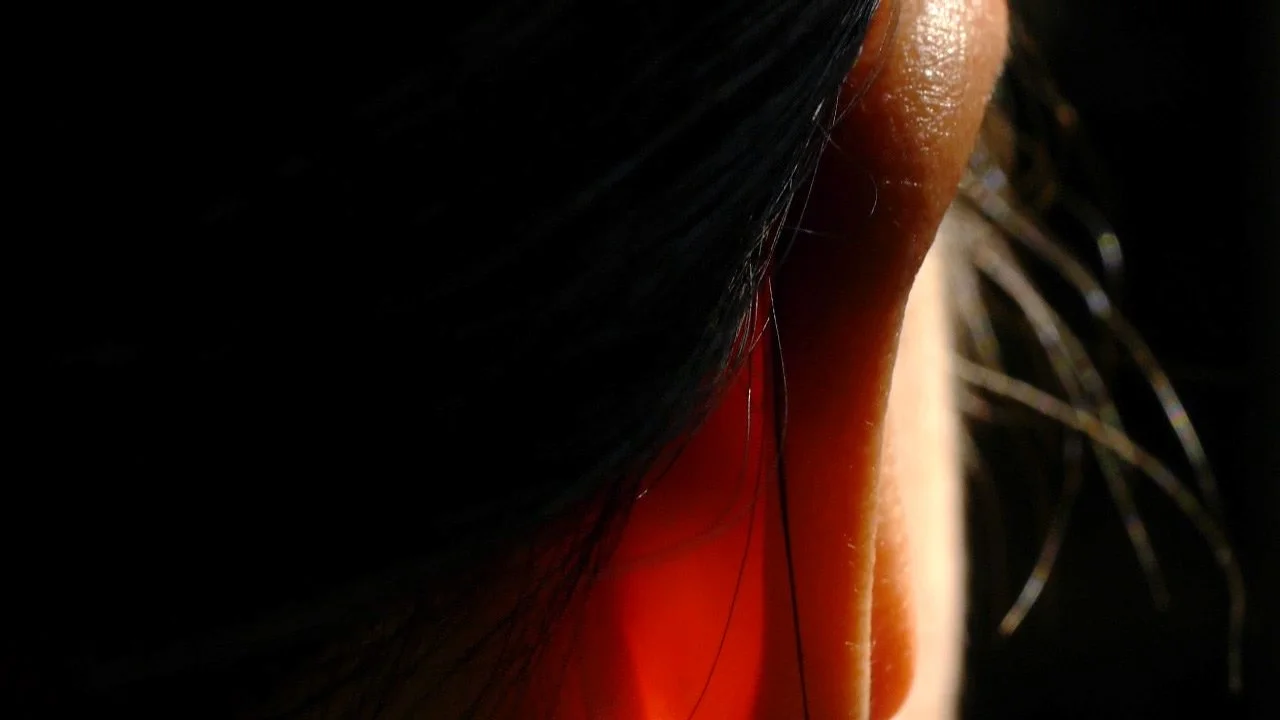
Inspired by Guillaume Apollinaire’s poem “The Nine Gates of Your Body,” Nine Gates moves in extreme close-up across the nine openings of a lover’s body. Written during the First World War for the woman he loved, Apollinaire’s poem joins erotic intimacy to the proximity of violence and death. The film follows the poem’s movement through the body, approaching it as a landscape of tenderness, vulnerability, desire, and trust.
About the Film
Nine Gates takes its title and structure from Guillaume Apollinaire’s poem “The Nine Gates of Your Body,” addressed to the woman he loved while serving as an artillery officer during the First World War. In the poem, erotic longing, military spectacle, exhilaration, and the possibility of death are inseparably entwined. Images of soldiers, surrender, artillery, barbed wire, and the devastated landscape of Flanders enter his celebration of the beloved body.
Following the poem, the film moves through the nine openings of a lover’s body in extreme close-up. At this scale, familiar anatomy becomes difficult to name immediately. Skin, moisture, breath, texture, and movement form an intimate landscape in which the body is at once recognizable and newly unfamiliar.
The work depends upon proximity and trust. The camera does not attempt to catalogue or explain the body, but remains with it attentively, allowing desire to coexist with vulnerability and care. The extreme closeness of the images unsettles the usual distance between the person looking and the person being seen, while preserving the subject’s presence as a lover rather than reducing her to an anonymous body.
Like Apollinaire’s poem, Nine Gates does not place erotic love and war in simple opposition. Both carry intensity, danger, surrender, and the possibility of crossing beyond the ordinary limits of the self. The film approaches the body as a series of passages into intimacy, while recognizing that another person remains irreducible and cannot finally be possessed through either love or vision.
Writing on the Film
Jørdis Lau, “The Strangeness of the Body,” in Appropriations of Literary Modernism in Media Art: Cultural Memory and the Dynamics of Estrangement, De Gruyter, 2022
In an extended study of Nine Gates, Lau examines the film’s transformation of Guillaume Apollinaire’s poem into a largely wordless visual work that translates the poem’s structure into image and sound. She considers how extreme close-up defamiliarizes the lover’s body, turning familiar anatomy into texture, fragment, and landscape, and explores the resulting tensions between intimacy and distance, attraction and unease, visibility and opacity. Lau also places the film in relation to cultural memory of the First World War, arguing that its silence, bodily fragmentation, and absence of conventional war imagery offer an indirect and sensuous form of remembrance.
Scott MacDonald, “Paweł Wojtasik,” in Avant-Doc: Intersections of Documentary and Avant-Garde Cinema, Oxford University Press, 2015
MacDonald describes Nine Gates as a work that confronts taboo through “a celebration of passionate love.” Following Apollinaire’s poem, he considers the film’s extreme-close-up exploration of a lover’s body and its transformation of the final gate into a mandala. The book reproduces this image alongside two cine-mandalas by Jordan Belson.
Taney Roniger, “Paweł Wojtasik’s Nine Gates,” Concatenations, 2011
Reviewing the exhibition at Priska C. Juschka Fine Art, Roniger describes the work’s movement between representation and abstraction, erotic attraction and unease, and visual intimacy and bodily estrangement. She considers the installation as a contemplative passage through Eros and Thanatos, arguing that its extreme scale, darkness, sound, and sensorial intensity produce a profound inner shift. Drawing on Georges Bataille, she interprets the work as a meditation on erotic love, mortality, and the longing to move beyond the isolation of the individual self.
Selected Presentations
Sector 2337, Chicago, 2018
Berkeley Art Museum and Pacific Film Archive, Berkeley, California, 2014
The Films of Paweł Wojtasik
Ambulante Film Festival, Mexico, 2014
Chicago Underground Film Festival, Chicago, 2014
Stuttgarter Filmwinter, Stuttgart, Germany, 2014
Dallas VideoFest, Dallas, Texas, 2013
Priska C. Juschka Fine Art, New York, 2011
Solo exhibition; gallery presentation
Distribution
Nine Gates is distributed by Video Data Bank.